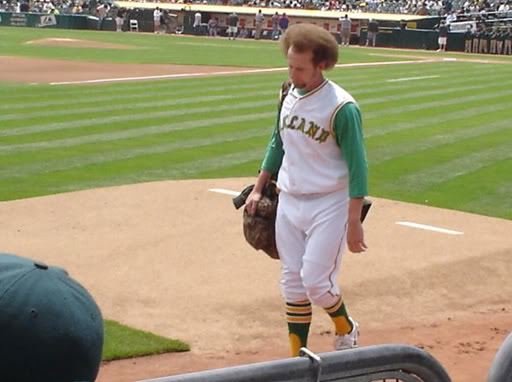
Weekend Matters, June 28
Sorry about today, folks. Between work and hapkido, I spent about one hour total on the computer this week. Also, I’m in the process of enlisting (or at least exploring the option) in the Army, so obviously that took up a lot of time…and was unfortunately reaquainted with the good ol’ Scan-tron test. I’ll definitely have a couple entries up this week, though.
Hope everyone had a good weekend and I want to send a congratulations out to David Aardsma and his wife on the birth of their first child. I’ll see everyone soon.
Evaluating the Conor Jackson trade
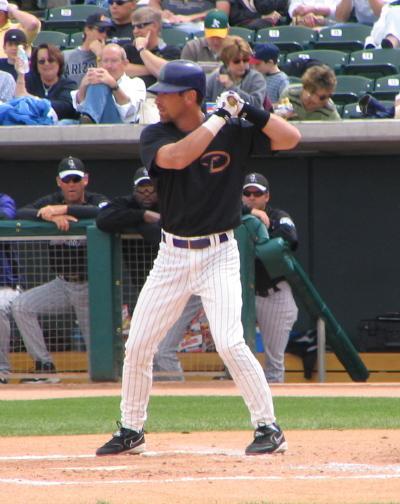
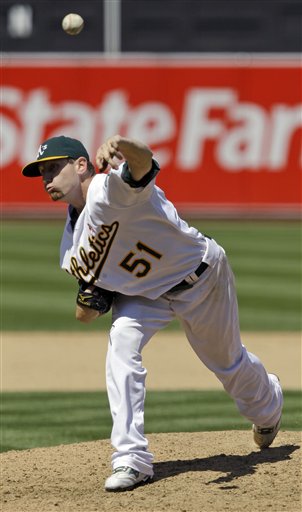
Yesterday, the Arizona Diamondbacks and the Oakland Athletics announced a trade, with the D-backs sending OF/1B Conor Jackson and $400,000 to the A’s for Minor League RP Sam Demel. In the real world, this was little more than a cost-cutting move by the D-backs, but in the fantasy realm, this deal may still have some impact in many leagues. First, a little background on the D-back’s first pick in the 2003 FYP Draft.
Prior to last season, Jackson was thought to be a stronger version of Mark Grace: a first baseman with a probable ceiling of just 20-25 HRs, but someone who will hit for a .300-plus average with a near-.400 OBP, good for at least 35 doubles and fewer than 75 strikeouts a year. His best season arguably came in 2008, when he hit .300/.376/.446 with 12 homers, six triples, 31 doubles, 75 RBIs and 87 runs scored. He also posted a 59/61 BB/K ratio while stealing 10 bases in 12 attempts.
What turned the former Cal product into an afterthought in 2009 was him contracting “Valley Fever,” a fungal disease relegated to the southwestern U.S. that lead to serious health issues. Jackson lost his strength, 15 pounds and eventually his starting job in Arizona’s outfield. This season, it still seems like Jackson is not himself as all his slash stats are well below his career norms.
The good news about this trade for Jackson is that he will no longer have to contend with tough pitching staffs and ballparks like San Francisco, Los Angeles and San Diego. Since he’s also never been very adept with the glove, he can occasionally seek refuge as a DH, and neither any stalwarts in the current Oakland outfield or young studs in the Athletics’ system to rob him of playing time. Conversely, he will be playing half of his games in the Oakland Coliseum and its spacious foul territory.
My take on the situation is this: Co-Jack is probably still recovering from Valley Fever and needs as much playing time as he can get. He might not return to his previous levels of production this year, but since he’s only 28, there is still time for him to improve upon his career highs in 2011. But beyond that, Jackson still is Grace 2.0: solid hitter, but not a slugger who you would want to be your primary option at either first or your top two outfield slots.
- ME
Weekend Matters, June 7
It’s Draft Day here at MLB, and though it isn’t nearly as hyped as it’s NFL and NBA counterparts, it probably has the greatest impact on a ballclub’s future, both short- and long-term. Two shining examples of that are the Tampa Bay Rays and–though I’m not a fan of kicking a dead horse–the Pittsburgh Pirates.
Thanks to atrocious records and astute selections, the Rays have gone from one of the worst teams in baseball back in 2007 to the best this season with players they drafted and nurtured through their system. Players like David Price (first overall, 2007), Evan Longoria (third overall, 2006), Jeff Niemann (fourth overall, 2004), Reid Brignac (second round, 2004), B.J. Upton (second overall, 2002), James Shields (16th round, 2000) and Carl Crawford (second round, 1999).
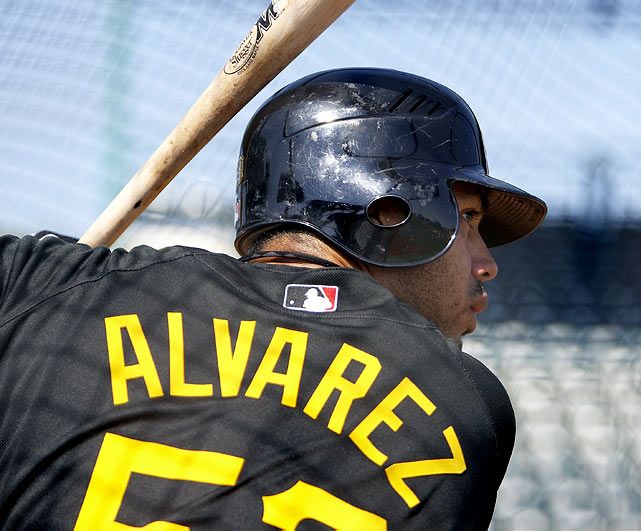
Meanwhile in the Steel City, the Pirates turned the act of poorly-picked drafts into an artform with selections like Daniel Moskos (fourth overall, 2007), Bryan Bullington (first overall, 2002) and John Van Benschoten (eighth overall, 2001), just to name a few. It has only been until recently that the club’s drafting strategy has shifted into a more progressive, more well-thought-out approach, and the results are showing with players like Pedro Alvarez, Andrew McCutchen and Neil Walker.
And just over this past weekend, other clubs around baseball either got significant contributions from or announced the upcoming MLB debuts for some of their recent draft picks. Some of these players haven’t exactly been flying under the radar, yet some of these players may not only have a major impact on their ballclubs this season, but will also figure in deciding many fantasy leagues, as well.
Now, everyone by now knows the deal with Stephen Strasburg while both Jason Heyward and Mike Leake have been with their respective ballclubs since the end of Spring Training. The players I want to focus on are the ones who have only recently been called up to the big leagues or are within earshot of their manager’s office phone in the Minor Leagues. (all players listed alphabetically)
Others:
- Drew Storen, RP — Washington Nationals:
- Chris Tillman, SP — Baltimore Orioles:
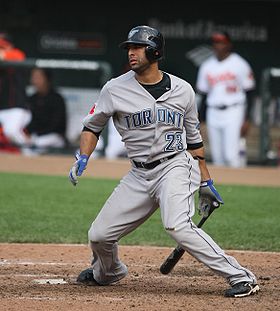
- Brett Wallace, 3B/1B — Toronto Blue Jays:
- Buster Posey, C/1B — San Francisco Giants
- Tanner Scheppers, SP – Texas Rangers
Injury Matters
- SP Brett Anderson (15-day DL; inflammation in left elbow)
- SP Doug Fister (15-day DL; shoulder fatigue)
- SP Kyle Lohse (transfered to 60-day DL; forearm issues)
- SP Oliver Perez (15-day DL; tendonitis in right patella)
- DH Mike Sweeney (15-day DL; back tightness)
- OF Nelson Cruz (15-day DL; hamstrings)
- OF Grady Sizemore (60-day DL; knee–out for remainder of season)
- 1B Justin Morneau (battling flu-like symptoms; probable for rest of week)
- 3B David Freese (out until further notice-OUFN-with sprained ankle)
- 3B Chipper Jones (OUFN with injured right ring finger)
- 3B Alex Rodriguez (left Sunday’s game with a sore groin; expected to play normally)
- OF Colby Rasmus (left Sunday’s game with a calf injury; status uncertain)
Laughing Matters
I’m not sure about everyone else, but it seems like every year, I draft at least one player that makes me feel like the smartest fantasy player ever. In relative terms, it’s a fantastic feeling. Every half-decent owner should experience this at least once a year, if for nothing else than to provide the illusion of brilliance and prop up what little self-confidence they may have after seeing their team crumble by Memorial Day.
This year, that player for me is Ubaldo Jimenez. I’m still astounded at the fact that I got him. My initial plan going into the draft was to take one of these three pitchers to be my staff anchor: Cole Hamels, Tommy Hanson and Jimenez. Somehow, I was able to draft all three of them in the fifth, sixth and seventh rounds, respectively. The results: after getting me 44 points last week (29 coming on his shutout alone), he leads The Men Who Laugh with 203.33 total points and keeping them within striking range of first place in my division.
Now if I could only go back in time to stop myself from dropping Jose Bautista for Travis Snider the day before Snider went on the DL…
- ME
Alphabet Soup in a Numbers Game
Hey everyone, I apologize for the gap in entries. As everyone knows, sometimes life can get in the way every once in a while. That and the martial art of hapkido has some rather painful techniques for the fingers & thumbs. Ouch. I think the length and depth of this entry should make up for it, though.
***********************************************************
For about 99 percent of fantasy leagues, there are only a few set of statistics that we care about. For hitting, it’s usually batting average (BA), home runs (HR), runs batted in (RBI), runs (R) and stolen bases (SB). On the mound, it’s the earned run average (ERA), walks-plus-hits by innings pitched (WHIP), strikeouts (K), wins (W) and saves (SV). Nothing earth-shattering with that. The problem we all encounter is trying to find and acquire those players who can give us the best overall production before anyone else can find them.
This is partially the reason why we have sabermetrics: to accurately gauge a player’s true value and estimate his most likely levels of production in the future.

The problem with all these new-fangled stats and metrics is two-fold: one, there’s about a million different statistics to choose from and two, many of them employ formulas that would give Albert Einstein–let alone Albert Pujols–a strong migraine. After playing fantasy baseball for almost 10 years now, even I still have trouble trying to figure out how to come up with a player’s VORP (Value Over Replacement Player) and what constitutes a good figure.
And that’s the biggest dilemma for most fantasy players: they are too intimidated by the complexity of these metrics to understand them, give up and hope they make the right personnel decisions. When it comes to making my roster choices, I’ve narrowed it down to six categories I feel most comfortable with. Now, these aren’t necessarily the absolute best categories to use, but it all comes down to what an individual feels most comfortable with. So here we go…
(All stats accurate on morning of June 2. Also of note: some of the leaders of these stats are not very surprising. The goal of giving you this information is to help you in waiver-wire decisions or in judging whether a trade is in your favor or not. You should know by now that some times the smallest, seemingly most insignificant transactions hold major implications for the rest of the season…and your team’s chances of making the playoffs.)
Strikeout rate (K%) & walk rate (BB%)
This will probably be the easiest out of all of the statistics I will show you. Quite simply, it measures how often a batter strikes out or walks based on his total plate appearances. While you can usually tell if a full-time player strikes out/walks a lot just by looking at his numbers, it’s more difficult to tell with batters who have far less playing time, or during the first part of the season, where everyone is trying to figure out what level everyone else is at.
For me, it allows me to figure out who is more prone to long slumps and who can still provide value, in terms of steals and runs, when they aren’t hitting well.
Highest K% – BB%
- Mark Reynolds (39.6) — Chipper Jones (20.3)
- Colby Rasmus (36.4) — Kevin Youkilis (19.1)
- Will Venable (36.0) — Josh Willingham (18.8)
Lowest K% — BB%
- David Eckstein (2.7) — Adam Jones (2.3)
- Jeff Keppinger (5.2) — Aaron Rowand (3.0)
- A.J. Pierzynski (6.4) — Ryan Theriot (3.2)
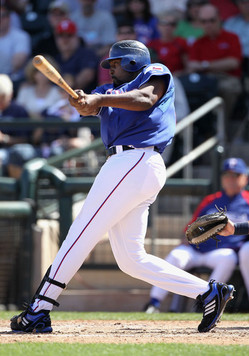
O-Swing Pct. (O-Sw%) & Z-Swing Pct. (Z-Sw%)
These stats are fairly straight-forward, too–how often does a batter swing at a pitch outside or inside the strike zone–but it carries more weight than the previous metric. Batters who tend to have higher O-Sw percentages are the ones who expand their strike zone, therefore increasing the likelihood of putting themselves in pitcher-favorable counts, making poor contact and/or striking out. In short, this shows how well-disciplined a hitter is.
The caveat here is that not all pitches inside the strike zone are very hittable and not all pitches outside the strike zone are unhittable.
Highest O-Sw% — Z-Sw%
- Vladimir Guerrero (50.4) — Josh Hamilton (80.9)
- Pablo Sandoval (43.3) — Guerrero (80.8)
- Jeff Francoeur (43.2) – Francoeur (80.5)
Lowest O-Sw% — Z-Sw%
- Daric Barton (15.1) — Brett Gardner (43.4)
- Bobby Abreu (15.3) — Abreu (48.9)
- Marco Scutaro (15.6) — Elvis Andrus (49.8)
Contact rate (Ct%)
Once again, here’s another verrrrrry easy stat to understand (noticing an underlying theme here?). But just for the point of stating the obvious, this stat measures how often a batter makes contact with the ball on every swing. Now that wasn’t too hard, was it? And the leaders…
Highest Ct% — Lowest Ct%
- Juan Pierre (96.3) — Reynolds (63.5)
- Luis Castillo (95.8) — Justin Upton (69.1)
- Scutaro (95.4) — Ryan Howard (69.7)
OK, Player X almost always makes contact on every swing while Player Z looks like he’s up at the plate with half a broomstick. So what? Well, Mr. You’re-So-Smart, if you notice the pattern of player types at each end of the list, you’ll notice that this significantly impacts two major fantasy categories: runs and RBIs.
First, you’ll see that the guys at the top of the Ct%-leaderboard are mostly table-setters: the guys whose incredible ability to put the bat on the ball is their primary reason for gainful employment. In most instances, the guys who make more contact stand a better chance to get on base, swipe a few bags (provided they have the speed and awareness necessary) and score runs! The players at the bottom of this barrel are, for the most part, the hard-hitting run-producers who sacrifice a controlled, accurate swing for a faster, more powerful and less-accurate hack in order to drive the ball.
If your team is greatly lacking in runs scored, start looking for any free agents who swing and miss less than 16 percent of the time (86 Ct%) and (don’t forget!) bat in front of players who can reliably drive them in. Should your team be deficient in RBIs, take the opposite approach. And should you find a player who combines both a high Ct% and a favorable figure of the next stat, well, you better not let him go…at least without getting someone at least just as good in return.
Isolated power (ISO)
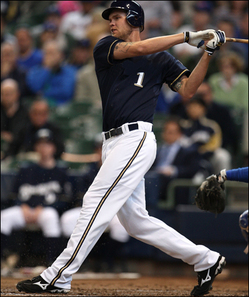
Most of us know that a guy with high slugging percentage is the guy you want if you’re looking for home runs, RBIs and total bases. But SLG is flawed in two ways: one, guys with high batting averages pumped up by lots of singles (see Suzuki, Ichiro) can sometimes appear to be semi-sluggers, or players mired in slumps will overly defleat their SLG. Secondly, SLG treats a triple the same way as a double or a home run when, in fact, a triple is more the result of a player’s speed rather than power. ISO helps whittle away some of the mitigating factors that go into SLG.
Now here comes the hard part, the first formula of the entry. The simple version is taking the SLG and subtract the BA from it: ISO = SLG – BA (ex: .658 – .347 = .311, Miguel Cabrera). The more advanced formula goes a little like this (remember, do the work inside the parenthesis first: ISO = (2B + 3B + (HR*3)) / AB (ex: 10 + 3 + (10*3) = 43 / 164 = .262, Jason Heyward).
As far as gauging a an acceptable figure, a slightly above-average ISO falls somewhere between the .175-.200 mark while an average figure is around .150-.175 or so. The leaderboard I’m showing you is from FanGraphs.com, which uses the traditional formula.
Highest ISO — Lowest ISO
- Jose Bautista (.344) — Ryan Theriot (.029)
- Corey Hart (.331) — Pierre (.030)
- Justin Morneau (.313) — Castillo (.035)
- Miguel Cabrera (.311) — Andrus (.038)
- Scott Rolen (.302) — Gordon Beckham (.042)
Batting Average, Balls In Play (BABIP)
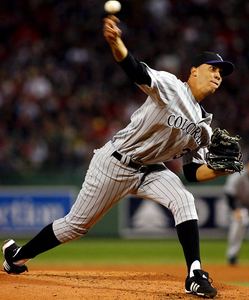
When this stat was first introduced, most people assumed that this would be a great tool in assessing a hitter’s value. But when the stat was explored a little more closely, it was revealed that there are way too many variables involved with this stat to have any strong corelation to a hitter’s performance. Buuuuuuuuut, this new metric did have its usefulness with pitchers and team defense.
In its essence, BABIP demonstrates how effectively a defense can turn balls hit in the field of play into outs, and in a round-about way, how difficult it is for a batter to make solid contact against a pitcher. This cuts out obvious things such as home runs, strikeouts and walks. The way you get this figure is pretty similar to getting a batting average, only with a couple wrinkles: BABIP = (H – HR) / (AB – K – HR + SF) (ex: [45 - 1 =] 44 / [268 - 70 -1 +0 =] 197 = .223, Ubaldo Jimenez).
The lower the number, the better it is for the pitcher and the higher, the better for the batter, with a league average hovering around the .300 mark. Rule of thumb (tntried to find a cleaned-up Boondock Saints link for that term, but couldn’t get one!) is that if a pitcher’s BABIP is either extremely low or high, he’s gone through a fairly (un)lucky stretch and is due for a return to the mean later on that season or the next. And should you notice one of your pitchers sporting a really nice BABIP, but is walking more and striking out fewer batters than usual, much like the second-ranked starter on the following list, it may be time to see if there are any takers for this particular hurler.
Highest BABIP — Lowest BABIP, Starters
- Justin Masterson (.404) — Jimenez (.223)
- Brian Matusz (.359) — Tim Hudson (.225)
- Zach Duke (.359) — Livan Hernandez (.229)
- Gavin Floyd (.355) — Jason Vargas (.236)
- Wandy Rodriguez (.351) — Matt Cain (.237)
Highest BABIP — Lowest BABIP, Closers
- Chad Qualls (.476) — Jose Valverde (.159)
- Bobby Jenks (.450) — Mariano Rivera (.182)
- Brian Wilson (.424) — Manny Corpas (.186)
- Heath Bell (.387) — Jonathan Papelbon (.196)
- Matt Lindstrom (.372) — Rafael Soriano (.218)
Fielding Independent Pitching (FIP)
The last stat for the day is probably also one of the more telling when it comes to pitching. You know how you see a pitcher’s ERA and you absolutely know that he is much better/worse than what it says? Well, this nifty metric helps trim away the grizzle and fat. Basically, what this stat does is eliminate the things pitchers cannot control and zeros in on the things he does: strikeouts, walks, home runs and hit batters (similar to the “Three True Outcomes” for hitters). The formula, though, is a little difficult to digest, though: FIP = (13*HR + 3*(HBP + BB – IBB) – 2*K) / IP +3.10
I’ll give you a minute to process that jumble of letters, numbers and other doo-wackies.
OK, done yet? Good. Now I would absolutely love to tell you how the creator of this stat, “Tom Tango” (yes, that is an alias), but I just don’t think I have the requisite brain power to figure that out. The good thing about this stat is that it operates at the same scale as ERA; someone with a 3.00 ERA is really good, someone with a 4.25 is OK and someone with a FIP above 6.00 is probably Javy Vazquez as a Yankee.
Highest FIP — Lowest FIP, Starter
- David Huff (6.01) — Roy Halladay (2.39)
- David Bush (5.66) — Francisco Liriano (2.41)
- Rich Harden (5.56) — Jimenez (2.62)
- Wade Davis (5.49) — Josh Johnson (2.69)
- Freddy Garcia (5.41) — Adam Wainwright (2.73)
Highest FIP — Lowest FIP, Closer
- Trevor Hoffman (9.06) — Jonathan Broxton (0.63)
- Papelbon (4.98) — Matt Thornton (1.08)
- David Aardsma (4.40) — Wilson (1.43)
- Francisco Cordero (4.34) — Carlos Marmol (1.79)
- Qualls (4.19) — Bell (1.98)
Well, hopefully you were able to get some useful information out of this. Like I said before, there are a lot of other statistics out there, and some may be easier to understand for some more than others.
- ME
Weekend Matters, May 24
One of the most perplexing things about baseball is how some players quickly emerge into the forefront without any prior warning or hype. The poster boy for this is, and probably forever will be, Albert Pujols, who burst into the big leagues in 2001 after being drafted in the 13th round of the 1999 First-Year Player Draft. The odds of that happening again are just a little bit more likely than Ronnie James Dio (a Yankees fan) going on the OzzFest tour this summer, but there usually are one or two players who put on a good show out of the blue.
Well, in this case, out of the Blue Jays. This year’s best out-of-nowhere (OON) player probably is Toronto 3B/OF Jose Bautista, who somehow has hit 14 home runs to tie Paul Konerko for the Major League-lead despite maxing out at 16 homers in 117 games in 2006 with the Pirates.
Bautista shares a common theme with most OON players (with Pujols being a major outlier) in that he’s closer to 30 (29, to be accurate) than he is to 20, much like Vinny Castilla (27), Luis Gonzalez (30), Jayson Werth (29) and Ben Zobrist (27)*. Not only that, but each of these players saw a decrease in their strikeout percentage (however small it was) in their breakout season as opposed to the season before. But this is where Bautista’s case takes a unique turn.
With all of the above-metioned players, their breakout seasons featured solid, respectable ISO’s (ISO – isolated power, helps measure a player’s raw power) with figures ranging from .208 (Gonzalez) to .246 (Zobrist). Bautista, on the other hand, flies well above this level as his ISO today stands at an incredible .327, third-highest in baseball behind Andre Ethier‘s .352 and Konerko’s .340. To give you a better idea, Pujols’ career ISO is .292, and every time Pujols’ ISO was higher than .300, he hit at least 43 home runs (four seasons total).
The next stat trend (BABIP) is a little more strange. During their breakout seasons, most of these batters–along with many other similar players–posted BABIPs (measures how well a batter hits when he makes contact,or, the efficiency of a defense turning batted balls into outs) north of .310, with the lone exception in our case being Gonzalez and his .262 BABIP. Bautista’s BABIP is an abysmally low .230, 47 points below his career average! Not only that, but his line drive-percentage has dropped (15.1 career to 13.4 in ’10) while his fly ball- and HR/FB percentages have spiked (43.6 – 52.0, and 11.5 to 21.2, respectively). Such rates are rarified air, usually traveled by players like Alex Rodriguez and Manny Ramirez.
The last thing that jumped out at me was his plate discipline. According to his player page on FanGraphs.com, Bautista is swinging at far more pitches outside the zone and making less contact on those swings. Conversely, he’s swinging at fewer pitches inside the zone, but connecting on those swings at a much higher rate.
So what gives? What can we make of these trends that seemingly pull us in different directions? This morning, I was looking through Buster Olney’s daily blog and saw he wrote about a possible explanation for Bautista’s emergence. Here’s a clip from that entry:
“In the midst of last season, Dwayne Murphy, the Jays’ first base coach at the time, talked with Bautista on the bench about starting his swing a little sooner. ‘There was something in the way he told me,” Bautista recalled. “He worded things differently, in a way I could understand.’
“So Bautista began working on starting his swing sooner. Until that point in his career, Bautista began his swing mechanics — the lift of his front foot, the cocking of his hands — as the opposing pitcher drew his pitching arm through his motion. What Bautista began to do is start his hitting mechanics just as the pitcher started: Bautista began lifting his front foot as the pitcher’s motion began, as if in sync.
“The benefit did not come immediately. The whole thing felt awkward, and Bautista struggled to feel comfortable. ‘I had some days when I felt even worse,’ Bautista said.
“…on Sept. 10, 2009, Bautista smashed a double and a homer and felt much better. Soon, he could not imagine how he had ever hit with his old swing.”
This revelation about a change in batting stance brings me back to Gonzalez in 1998. Before, Gonzo used to have a fairly normal batting stance that produced respectable, but not incredible results. It was during this time that he gradually opened his stance up so that his hips at the start of his stance were on an angle pretty much between the mound and the first base-foul line. From 1998 to 2005, Gonzalez was one of the best hitters in baseball, batting .295/.385/.523 with 247 home runs, 345 doubles and 845 RBIs in one season with the Tigers and eight with the Diamondbacks.
So am I saying Bautista is the next Gonzalez? Not quite, since after all, we’re not even though the first full year of the change and haven’t seen if pitchers have figured out how to exploit whatever weaknesses this approach may have. But, I will say this: the only other third base-eligible players putting up more points than Bautista are Kevin Youkilis and Evan Longoria. Only Ryan Braun is ahead of Bautista in production amongst outfielders. That doesn’t just make Bautista a must-own, he is a must-start-now.
* (note – These players were chosen at random and do not constitute an expected range of performance. They only serve as recent comparisons; points of reference rather than absolute gospel.)
Injury Matters
This is a new section I’m going to put in all W.M.‘s from now on, letting people who weren’t able to follow games this weekend know who incurred any injuries between Friday and Sunday. The type of injury, if known, will be listed and anyone placed on the 15- or 60-day DL during this time span will be listed first and in bold. All listing will be in alphabetical order. And since this is a new section, it will probably have a couple tweaks here and there until it can be at its most useful format.
- Homer Bailey (tightness in right shoulder — 15-day DL)
- John Maine (right shoulder weakness — 15-day DL)
- Brad Penny (strained right latissimus dorsi — 15-day DL)
- Ivan Rodriguez (strained back — 15-day DL)
- Jimmy Rollins (strained right calf — 15-day DL)
- Carlos Gonzalez (strained left wrist)
- Denard Span (bruised right shoulder)
Laughing Matters
Bringing this article back full circle, I have a confession to make: I am a complete idiot, rock-head, dope and whatever else you can throw at me that’s fit to print. You know how I just spent the majority of this post espousing the hitting wonder that is Jose Bautista? You do?
Well, I had him and I released him a week and a half ago for Travis Snider.
Who went on the DL the very next day.
The fact that I won this past week is an absolute miracle, given I started an outfield of Carlos Gonzalez (ugh), Garrett Jones (meh) and Denard Span (yay…aw, crap) while Tommy Hanson laid a nice little stink bomb that cost me 11 points. And yet, somehow, I’m 4-3 despite having the fewest home runs and third-worst slugging percentage in my 12-team mixed league.
Just goes to show you that even the so-called “experts” can also double as those people you see trying to push a door open when it clearly reads “pull.”
- ME
Weekend Matters, May 17
Another weekend down and one more to go before Memorial Day Weekend. I don’t know about you, but I can’t wait. So here…we…go.

Barren Haren?
For the last three years, Dan Haren has been the quiet ace in baseball: always putting up top-flight numbers but getting little notoriety for his efforts. For the last three years, he’s gone 45-27 with a 3.18 ERA, a 1.11 WHIP, 8.37 K/9 and a microscopic 1.79 BB/9 rate. I don’t know about you, but those numbers ain’t too shaby. This year, though, Haren has been completely out of character, as you can easily tell from his last start on Sunday against the Braves.
That tidy little ERA is up to 4.83 and his WHIP has ballooned to 1.37. He’s walking nearly one whole extra batter this year (2.3) compare to 2009 (1.5) and his H/9 shot up from 7.5 to 10.1. How does that happen? According to FanGraphs.com, there hasn’t been any real change in the velocity of his pitches–though he has either apparently stopped throwing his slider or there is no information available regarding that pitch. So where does that leave us?
Well for one thing, hitters are making more contact off of him. Batters are hitting .255 off Haren for his career, but that number jumps to .285 this season. One culprit is an abnormally high BABIP (.357 – 2010, .302 – career). Look a little deeper and you’ll see that the kind of contact batters are making isn’t necessarily bad for Haren. This year, batters hit line drives on just 17.6 percent of batted balls (career – 19.9), ground balls 47.7 percent of the time (career – 44.6) and fly balls 34.7 percent of the time (career – 35.6). And finally, Haren’s opponents are actually making less contact than before when they swing, putting the bat on the ball 73.1 percent of the time, compared to his 78.7 lifetime mark.
Ultimately, the fact of the matter is that Haren has simply been really, really unlucky so far this season. It happens. This is one of the reasons why stats like ERA (and especially W-L) can be so tricky when trying to properly value pitchers. So, if I were you, I would make it a priority to buy low on Haren and hope that his owner doesn’t have the same insight or patience that you do.
Leadoff Men: the Brave and the Prado
When a team has hitters like Jason Heyward, Chipper Jones and Brian McCann in their lineup most of the time, it would be fair to say that they should be one of the better offenses in the league. Yet, the Atlanta Braves have the fourth-highest OBP in the NL but have scored just the ninth-most runs. Something like that happens when your leadoff hitters are batting a collective .183/.272/.294. For the first six weeks of the season, manager Bobby Cox couldn’t find anyone useful to put in at the top spot of his lineup card. That was until this past Friday, when he tried Martin Prado.
The result? Prado went 6-for-14 (.429) with two home runs, six RBI and two runs scored as Atlanta took two of three games from Arizona. He may not draw too many walks (just a 6.5 percent walk rate this year), but he also doesn’t strike out that much, either (14.2 percent). His .354 BABIP may appear high, but his career mark of .309 suggests that this isn’t unsustainable.
And with the already-fearsome Heyward batting behind him, pitchers will be even less inclined to get fancy with the 26-year-old Venezuelan and give him more fastballs to hit. When you take that into account that Prado is also eligible at 1B and 3B, and you have an extremely valuable and flexible asset on your fantasy roster…should you own him, of course.
Resurgent Rangers
A year ago, Vladimir Guerrero and Josh Hamilton were on different teams but placed in the same group: injured sluggers who have already seen their better days go by. The two of them combined to hit 25 home runs last year when in 2008, they belted 27 and 32 long balls each, respectively. Now, they are key parts in a Texas offense that I feel is the most explosive in baseball (yes, even more so than the Yankees or the Phillies). If you would like to disagree, let me put this lineup in front of you:
- Elvis Andrus
- Michael Young
- Hamilton
- Guerrero
- Nelson Cruz
- Ian Kinsler
- Justin Smoak
- Max Ramirez
- David Murphy
While you try to find the hole in that lineup, let me tell you the biggest reason why Guerrero and Hamilton have improved so much this year: they’re healthy (duh). When Guerrero’s back and knees are right, he’s able to have healthier swings (and less prone to strikeouts, whiffing at just 10.7 percent this year as opposed to 14.6 percent last year) and put more power into those swings (his line drive rate has risen from 18.3 percent in ’09 to 20.2 percent in ’10).
Hamilton–though he’s in a bit of a slump (1-for-13, 9 strikeouts in last three games)–just looks like he’s healthier and playing better. Will he be a .300-plus hitter and one of the five-best outfielders in the game? Maybe, but it’s far from a guarantee. But will he provide plenty of extra-base hits and RBIs for both the Rangers and your fantasy squad, as long as he’s healthy? Without a doubt.
- ME
(Note: later on today, I’ll add on a little news about what’s going on with my main fantasy team, The Men Who Laugh.)
Does Perfection have its Price?
OK, so this post is a liiiiiittle off-schedule. Better late than never, right? Anyway…
Tonight is Start 1, APG (After Perfect Game) for Dallas Braden, as he and the rest of the Athletics face the Angels in Anaheim, Calif. The question on everyone’s mind, from players to the media to the fans to fantasy owners, is what happens next? How does one follow up perfection? Is it a sign of things good or bad to come, or is it just one of those weird anomalies that helps baseball be so unique?
Well, of course, that’s a question I just couldn’t let go unanswered. But there is one major caveat before you read further: since there have only been 19 perfect games in the modern era of baseball, the sample size is very small, understandably. Also, since perfect games have happened across different offensive times, so I only looked at perfect games that occurred during the current high-powered offensive climate we’re in now.
That leaves us with five such games (from earliest to latest): Kenny Rogers on July 28, 1994; David Wells on May 17, 1998; David Cone on July 18, 1999; Randy Johnson on May 18, 2004; and Mark Buehrle on July 23, 2009.
When I went through these games, all I was looking for was how each pitcher was doing before the big game and how he did after it. Did particular rate statistics increase or decrease by a significant amount for these five? Was there any clearly definitive pattern? The only instance the process was complicated was with Rogers, who made only two more starts after his perfecto before the ’94 season was cancelled due to the players’ strike.
After I first looked through the data, I was a little disappointed. Some pitchers were better for the rest of the season after The Game while others bombed out, and everyone’s rate stats were different. But, if you take another look, you’ll see a pattern does emerge, and it all depends on when the perfect game takes place.
I saw that half of the perfect games occurred May and the other half in July. When you separate the two, the pattern smacks you right in the face: those who had their moment in the sun in May went on to have great seasons while those that happened in July saw their season take a steep nose-dive. On the surface, that is how simply it appears, but there are a couple undercurrents that should be mentioned.
The two pitchers who had perfect games in May, Wells and Johnson, had at least one highly exceptional skill set: Wells was probably one of the best control artists in the last 25 years, while Johnson might simply be one of the two greatest strikeout pitchers ever. Also, with the exception of the then-29-year-old Rogers, all these pitchers were at least 30 years old, so they were able to rely on intelligence and guile as well as their physical abilities to get hitters out. Braden is neither north of 30 nor does he possess a skill set that separates him from the majority of his peers (at least for now).
So what does this all mean? Braden’s PG came in May (which is good), but he isn’t well-known for a particular stat or ability (which isn’t good), so should I start him? Sit him? Cut or trade him?
Well, in my opinion, I like to think that Braden will have a good 2010 season, but nothing like what Boomer Wells had in ’98 or the Big Unit in ’04. He’s still learning and improving, so I also highly doubt his season will suddenly careen into the abyss, dragging many fantasy seasons along with it. Not only that, but Mr. 209 pitches half of his games in one of the most pitcher-friendly ballparks in the game.
Braden is definitely worth keeping on your roster as a back-end starter in mixed leagues and a mid-rotation guy in AL-only leagues. But odds are that your league has a guy who’s pitching is so bad that it would make the Mariners’ lineup look more like the Rangers. Make that guy your new best friend and name your price for the irreverant southpaw.
- ME
Oh, one more thing. While searching for pictures of Braden, I came across this beauty. It was too good for me to leave alone, so here it is. Dallas Braden: Human Time Machine.
Recent Comments